
11 Proven Customer Retention Strategies for Small D2C Brands

Every founder remembers the thrill of that first sale notification. But here’s the thing nobody warns you about: getting a customer to buy once is the easy part. Getting them to come back is where most small D2C brands quietly lose money.
Customer acquisition has become increasingly expensive and unpredictable for many small D2C brands. When paid advertising consumes a large share of the first-order margin, generating repeat purchases becomes an important path towards sustainable growth.
That’s exactly what this guide is about — customer retention strategies for small D2C brands that don’t require a big team, a big budget, or a fancy MarTech stack. Just 11 practical moves you can start applying this month, plus the metrics, a 30-day plan, and a real brand example to make it concrete.
What Is Customer Retention for a D2C Brand?
Customer retention is simply your brand’s ability to turn a one-time buyer into a repeat buyer — and eventually into someone who buys without needing a discount to be convinced.
It’s different from acquisition, which is about getting a stranger to place their first order. Retention picks up right after that first delivery lands at the customer’s door.
A few terms worth separating:
- Repeat customer — has placed two or more orders.
- Loyal customer — buys consistently and is unlikely to switch to a competitor.
- Subscriber — has committed to a recurring purchase, usually for consumables.
For a small skincare or supplement brand, this might look like a customer buying a 30-day pack, then automatically getting a reminder and reordering the same product a month later — without a single ad being shown to them again.
Why Customer Retention Matters for Small D2C Brands
Small brands don’t have the ad budgets of the big players, which is exactly why retention matters more for them, not less.
- Repeat orders usually require less acquisition spending than first-time orders, helping protect margins.
- Loyal customers tend to spend meaningfully more over their lifetime than first-time buyers.
- Happy repeat customers refer friends and family, and referral-driven customers convert at noticeably higher rates than cold traffic.
- Predictable repeat revenue makes cash flow and inventory planning far less stressful for a small team.
Customer Retention Metrics to Track Before You Begin
You can’t improve what you don’t measure. Before jumping into strategies, set up a simple tracking sheet (Google Sheets is fine) with these five numbers.
| Metric | What It Measures | Simple Formula |
|---|---|---|
| Repeat Purchase Rate | % of customers who buy again | Repeat customers ÷ Total customers |
| Customer Retention Rate | % of customers retained over a period | (Ending − New) ÷ Starting × 100 |
| Purchase Frequency | Average number of orders per customer | Total orders ÷ Unique customers |
| Customer Lifetime Value (LTV) | Estimated total value of a customer | AOV × Purchase frequency × Customer lifespan |
| Churn Rate | Rate at which customers stop buying | Lost customers ÷ Starting customers |
There is no universal “good” repeat purchase or churn rate for every D2C brand. Consumable categories such as food, skincare, and supplements naturally generate more frequent repeat purchases than fashion, furniture, or durable products. Compare performance using the same customer cohort and measurement period, then track whether it improves month over month or quarter over quarter — that trend line matters more than any external benchmark.
11 Customer Retention Strategies for Small D2C Brands
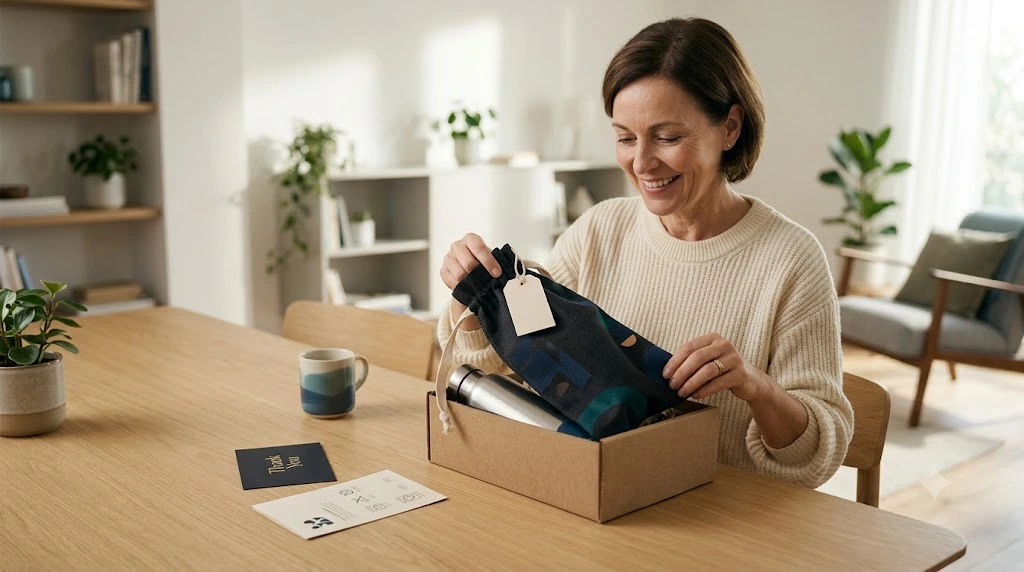
1. Improve the First Purchase and Unboxing Experience
The first order sets the tone for everything that follows. Get these basics right before spending on anything fancy:
- Write clear, honest product information — no exaggerated claims.
- Promise realistic delivery timelines and beat them, not the other way around.
- Package the product carefully; damaged items are one of the fastest ways to lose a customer forever.
- Add a simple handwritten-style thank-you card or a QR code linking to a usage guide.
- Resist the urge to over-invest in premium packaging if it eats into your margin — thoughtful beats expensive.
A failed or clunky payment experience at checkout undoes all of this before the order even ships — our payment gateway audit checklist is worth running through if you haven’t checked yours recently.
2. Build a Useful Post-Purchase Communication Flow
Silence after checkout is where anxiety (and cancellations) creep in. A simple flow looks like this:
- Order confirmation
- Shipping update
- Delivery confirmation
- Product-use guidance
- Review request
- Reorder reminder
The key rule: not every message should be promotional. Mix in genuinely useful content — how to use the product, storage tips, or a FAQ — so customers don’t tune out your emails and WhatsApp messages.
3. Set Product-Specific Replenishment Reminders
This works especially well for beauty, supplements, food, and other consumables.
- Base your reminder on the actual usage cycle of the product, not a generic 30-day rule.
- Choose the channel your customers actually respond to — email, SMS, or WhatsApp.
- Include a one-click reorder link so there’s zero friction between “I need this again” and “order placed.”
4. Personalize Messages Using Purchase Behavior
Generic blasts get ignored. Simple segmentation gets results.
- Separate first-time buyers from repeat buyers in your messaging.
- Recommend products based on the category they already purchased from.
- Use browsing and order history, but keep it light — don’t feel “surveilled.”
- Skip irrelevant, mass-blast discount codes that train customers to wait for sales.
5. Create a Simple Loyalty Program Customers Understand
Loyalty programs work only if customers get them in ten seconds. Options that work well for small brands:
- Points-based rewards
- Store credit
- Purchase milestones (e.g., “5th order gets a free gift”)
- Early access to new launches
- Birthday or anniversary rewards
A word of caution: an overly complicated points system with confusing tiers can actually hurt retention for a small brand — customers give up before they earn anything meaningful.
6. Reward the Second Purchase
For many D2C brands, the transition from the first to the second purchase is one of the most important stages in the customer journey.
- Offer a limited-time incentive specifically for the second order.
- Introduce a free-shipping threshold to nudge order value up.
- Bundle a complementary product with the reorder.
- Send a personalized “you might also like” recommendation based on their first purchase.
7. Use Customer Feedback to Fix Retention Problems
Retention issues are usually hiding in plain sight — inside your feedback data.
- Run a one-question survey right after delivery (“How likely are you to buy again?”).
- Read your product reviews for recurring complaints.
- Track why customers are returning items, not just that they are.
- Mine support conversations for patterns.
- Treat negative feedback as free R&D for product and delivery improvements.
8. Make Returns and Customer Support Frictionless
Counterintuitively, a smooth return experience can increase loyalty.
- Write a clear, jargon-free return policy.
- Make support easy to reach — one visible channel is better than five buried ones.
- Set a realistic response-time promise and stick to it.
- Communicate delays proactively, before the customer has to ask.
- Reframe returns internally: they’re a retention opportunity, not just a loss.
If your small team is stretched thin on support tickets, tools built for this exact problem can help — see our roundup of AI customer support tools for Shopify for options that don’t require hiring a full support team.
9. Build High-Value Bundles and Subscriptions
Bundles and subscriptions increase both order value and stickiness — when used on the right products.
- Frequently-bought-together bundles
- Starter kits for new customers
- Refill packs for existing customers
- Subscribe-and-save options
- Flexible pause, skip, and cancel controls (this actually reduces churn, not increases it)
Be honest with yourself: subscriptions don’t fit every product category. Forcing a subscription model onto a low-repeat-purchase product usually backfires. If you’re running a single-SKU or hero-product brand, your platform choice matters here too — see our comparison of the best ecommerce platforms for single product stores to check whether yours supports subscription and bundle logic natively.
10. Build a Customer Community and Referral Loop
A strong community can turn satisfied customers into credible brand advocates.
- Encourage and repost user-generated content.
- Start a private community (WhatsApp group, Discord, or a Facebook group).
- Feature real customer stories on your site and social channels.
- Offer referral credits that reward both sides of the referral.
- Partner with micro-influencers who are already customers, not paid strangers.
11. Run Win-Back Campaigns Before Customers Churn Completely
Segment customers by how inactive they’ve become, and address each group differently:
- At-risk customers — haven’t ordered in a while but were previously active
- Lapsed customers — gone quiet for months
- Previously loyal customers — used to order frequently, then stopped
- One-time buyers — never came back after order one
A simple win-back sequence:
- A helpful, non-salesy reminder
- A relevant product recommendation
- A short feedback request (“what stopped you from reordering?”)
- A carefully chosen incentive — last resort, not first move
Customer Retention Strategy by D2C Business Type
Not every strategy works equally well across categories. Here’s where to focus first, based on what you sell.
| D2C Category | Most Useful Retention Strategy |
|---|---|
| Beauty and skincare | Replenishment reminders and usage routines |
| Food and beverages | Bundles and subscriptions |
| Fashion | Personalization and early access |
| Supplements | Usage education and refill reminders |
| Home products | Complementary product recommendations |
| Premium products | Customer service and community access |
Brand Example: How The Whole Truth Builds Trust Beyond the First Purchase
Talking about strategies in theory is easy — seeing how a real brand applies them is what makes a strategy feel usable.
The Whole Truth provides a useful example of how a D2C brand can support long-term customer relationships. The Indian health-food brand combines transparent product communication with educational content designed to strengthen customer trust over time. Its approach illustrates how trust-building can complement loyalty and repeat-purchase campaigns, although publicly available information does not establish how much any individual initiative improved retention.
The takeaway for a small D2C brand isn’t “copy this exact program.” It’s this: transparency and education can work alongside loyalty mechanics, rather than being replaced by them.
This lines up with a broader pattern in retention research. An often-cited Harvard Business Review analysis — building on earlier work by Bain & Company’s Frederick Reichheld — suggests that a 5% improvement in customer retention can increase profits by 25% to 95% in some businesses. The outcome varies substantially by industry, margins, and customer behavior, but the direction of the finding is a strong argument for treating retention as seriously as acquisition.
A 30-Day Customer Retention Plan for a Small D2C Brand
Week 1 — Measure Repeat purchase rate, return reasons, customer complaints, average time between orders.
Week 2 — Fix the Experience Order and shipping messages, product-use instructions, support response process, return-policy clarity.
Week 3 — Launch One Retention Campaign Pick just one: a reorder reminder, a second-purchase offer, a review request flow, or basic customer segmentation.
Week 4 — Review and Improve Campaign revenue, repeat orders generated, unsubscribe rate, support complaints, and — importantly — offer profitability.
Common Customer Retention Mistakes D2C Brands Make
- Sending every customer the same blanket discount
- Overcomplicating the loyalty program
- Only tracking email open rate and ignoring actual repeat orders
- Ignoring a poor delivery experience because “the product is good enough”
- Messaging customers so often they unsubscribe or mute the brand
- Never using first-purchase data to personalize the next touchpoint
- Handing out incentives without checking if the margin can absorb them
How to Choose the Right Retention Strategies
Run through this quick decision framework before picking your next move:
- How long does it typically take a customer to need this product again?
- What is your average order value right now?
- Where is your biggest churn point — after order one, order two, or later?
- Which channel do your customers actually respond to — email, SMS, or WhatsApp?
- Which strategy can work without leaning on constant discounting?
Final Takeaway
You don’t need to launch all 11 strategies at once — that’s a fast way to burn out a small team.
Start with post-purchase communication, rewarding the second purchase, and building a basic feedback loop. Measure results for 30 days. Once those are solid, layer in loyalty programs, referrals, or subscriptions.
Retention isn’t a one-time project — it’s a habit your brand builds one repeat order at a time.
Ready to stop losing customers after their first order? Start with just one strategy from this list today — the reorder reminder or the second-purchase offer are two practical places to begin — and track your repeat purchase rate for the next 30 days.
Frequently Asked Questions
What are the best customer retention strategies for small D2C brands? Post-purchase communication, replenishment reminders, second-purchase incentives, simple loyalty programs, and win-back campaigns are practical starting points for small teams with limited budgets.
How can a small D2C brand increase repeat purchases? Focus on the first-to-second purchase transition with a targeted incentive, personalize follow-up messages based on what the customer already bought, and remove friction from the reorder process.
What is a good customer retention rate for a D2C brand? There is no single benchmark that fits every D2C brand. The right target depends on the product category, purchase cycle, price, and whether the business uses subscriptions. Measure customers from the same acquisition cohort over a clearly defined period and compare improvement against your own historical performance.
Are loyalty programs effective for small D2C brands? Yes, but only when kept simple. Complicated, multi-tier points systems often confuse customers and reduce participation instead of increasing it.
How can D2C brands retain customers without offering discounts? Invest in better post-purchase communication, faster support response times, product-use education, and community-building — all of which build loyalty without training customers to wait for sales.
Which customer retention metrics should a small brand track? Repeat purchase rate, customer retention rate, purchase frequency, customer lifetime value, and churn rate — reviewed monthly or quarterly rather than weekly.
How often should a D2C brand contact previous customers? There’s no universal number, but a good starting point is a handful of touchpoints in the first 30 days post-purchase, tapering to one or two relevant messages a month — always mixing value with promotion.